Loading
One person.Many touches a day.Every touch makes the system stronger.
Live loop
2 interfaces working · 3 a direction
2 interfaces working · 3 a direction
A person is at the center of BOOST BRANDS. In the morning they grab our coffee, at lunch — our ready food, and more daily habits will follow. Every purchase teaches the shared team, purchasing and standards something — so the next visit gets a little better than the last.
Touch → memory → decision → change on site → a sharper next touch
01 · A person and their dayClosed loop
ONE PERSON · ONE DAY
02 · Five ways to spend a day2 working · 3 vision
01↗CoffeeMorningWorking02↗FoodDayWorking03↗SportAfter workVision04↗WellnessEveningVision05↗LeisureWeekendVision
03 · Flow↓ shift events · ↑ improvements back
System memoryOne context across every interface
PROCESSINGIncoming — from the shift ↓
- Returning guest · morning ritual
- Feedback: serving time
- Item sold out · kitchen
- Beans — two days left
Outgoing — back to the shift ↑
- Shift reinforced for the morning peakRULE
- Serving standard — into trainingTO CONFIRM
- Production: an extra batchTO CONFIRM
- Bean purchasing recalculatedRULE
Working — real revenue and operationsVision — a direction, not a promiseAny node → “How the system works” ↗
Proof before promise
The real world first.
We build and test things by hand first — and only then call them a system. Figures are published once they have a definition, a period and a source.
PHYSICAL / LIVE
ROBOOST works offline
Real coffee shops, a real product and daily sales. Not a slide from a presentation — places people come to every day.
OPERATIONS / LIVE
One team behind every location
Purchasing, production, training and quality control — a shared layer that serves every location every day.
FEEDBACK / LIVE
Feedback returns to the product
What a guest says at the counter reaches the recipe, the shift standard and purchasing — not a report nobody reads.
The gap
Today every brand sees only its own receipt.
Coffee, food, sport and self-care live with different companies. A person introduces themselves from scratch every time: a new loyalty card, new forms, a new service that remembers nothing about them.
And inside the business everything is duplicated: every brand rebuilds purchasing, hiring, training and standards. Experience paid for by one brand never reaches the next.
We assemble one connected experience of a person — and one team behind all the brands.
- Coffeeown loyalty card
- Foodown forms
- Sportown data
- Beautyown service
How it works
Locations and products → system memory → smart operations.
01WORKING
Locations and products
ROBOOST coffee shops, LABOOST ready food, own production. Live contact with a person every day.
- SIGNALS
- Sales, visits, shift quality, stock
- ACTIONS
- Standard, training, purchasing, menu
- BOUNDARY
- Working today. We expand as the team is ready.
02PILOT
System memory
One person’s visit history, preferences and feedback come together — only with their consent.
- SIGNALS
- Visits, ratings, repeat purchases
- ACTIONS
- Relevant communication, bringing the guest back
- BOUNDARY
- Running as a limited pilot. We publish the scale only once it is verified.
03ROADMAP
Smart operations
Accumulated data helps the team decide faster: what to buy, what to fix in the product, what to teach the shift.
- SIGNALS
- Recurring demand and quality patterns
- ACTIONS
- Forecast, purchasing, standard control
- BOUNDARY
- Not launched yet. A human always has the final say.
Flywheel
Every ritual makes the next one sharper.
- 01
Visit
A person comes to a real location for a familiar ritual.
- 02
Signal
Purchase, choice and rating become a recorded event.
- 03
System memory
Events of one person come together — with their consent.
- 04
Team decision
What we learn changes purchasing, standards, training and communication.
- 05
Better experience
The person gets what actually suits them.
- 06
Next visit
The ritual repeats more often — and the loop starts sharper.
The flywheel only spins with regular contact. We do not present it as proven: every transition is first tested on real shifts and real sales — and only then do decisions rely on it.
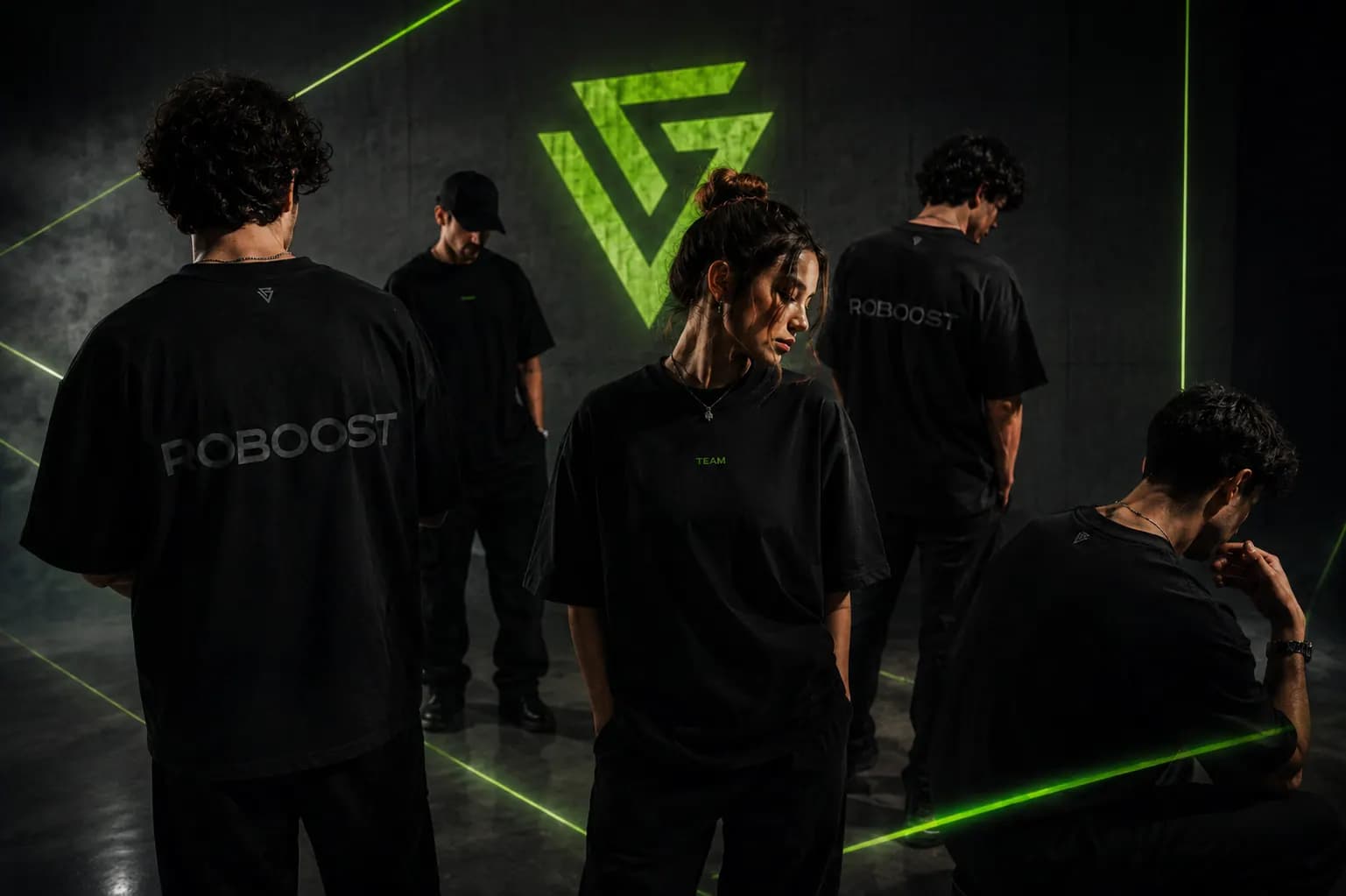
ROBOOST / physical layer


Not one of the brands. The entry point into the system.
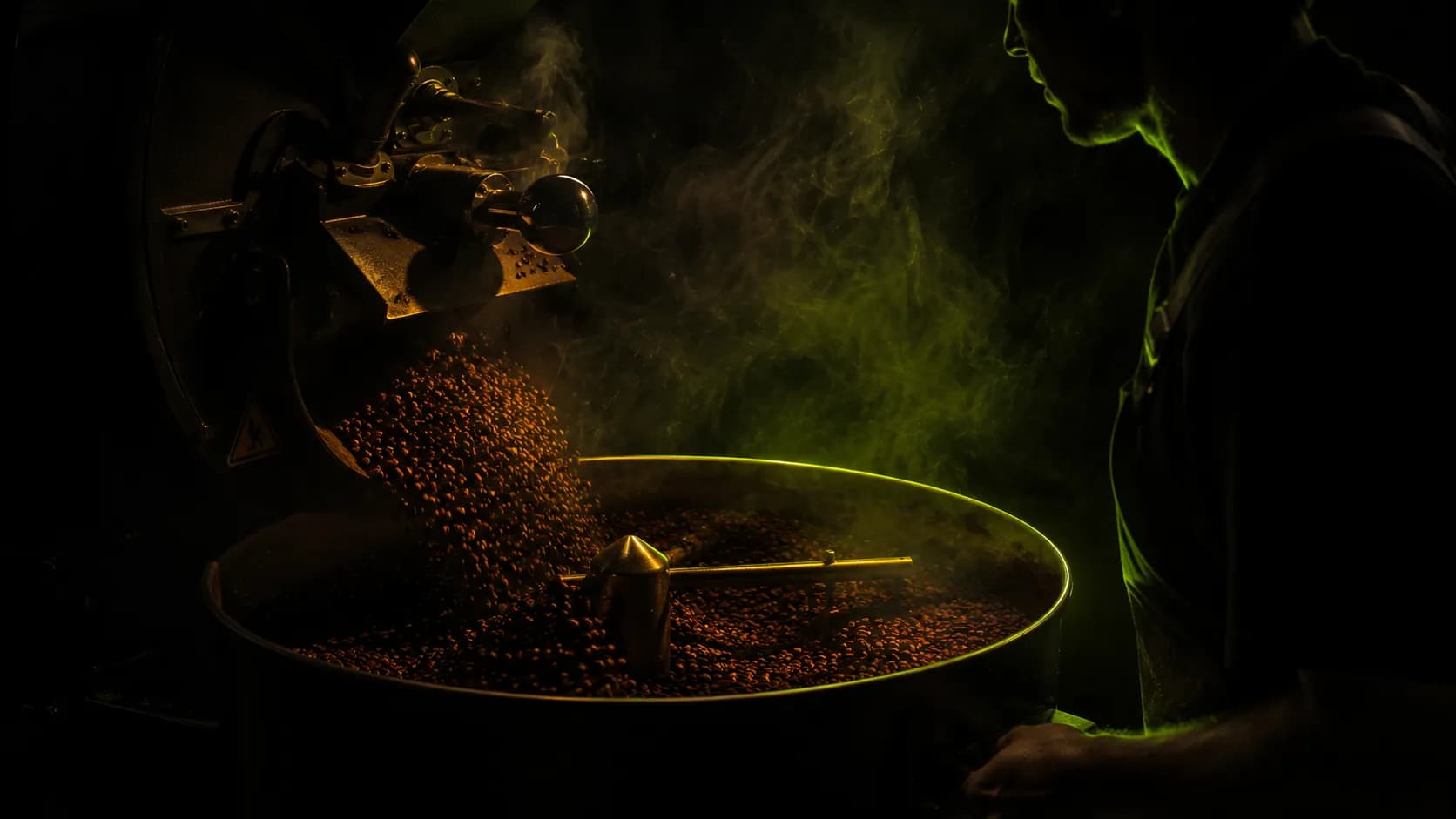
Coffee creates a frequent ritual and live distribution. Through ROBOOST the system learns to connect product, service, production and feedback — before expanding further.
PHYSICAL LAYER / WORKING- product
- locations
- production
- supply
- training
- standards
- quality control
Now / next
We do not present the future as the present.
WORKING
Locations and products
- ROBOOST coffee shops
- LABOOST food and production
- Daily operations
- Purchasing and training
- Quality control
PILOT
System memory
- A recognised guest
- Consent and visit history
- Feedback
- First communication scenarios
ROADMAP
Smart operations
- More system memory
- Quality hints
- Purchasing forecast
- New categories
VISION
One connected day
- Coffee and food as one experience
- Sport
- Wellness
- Recovery
Expansion thesis
Not more categories. More connectivity.
- 01Increases the frequency of useful contact, not the number of signboards.
- 02Uses what is already built: locations, the team, system memory.
- 03Strengthens the shared team instead of building a parallel one.
- 04Does not break the discipline of the working business.
- WORKINGCoffeeA frequent, legible ritual. Entry point — ROBOOST.
- WORKINGFoodLABOOST ready food and own production inside the system.
- ROADMAPRoastingOwn roasting: control from bean to cup, retail packs, B2B. Economics not yet proven.
- ROADMAPWaterFunctional water through existing locations — after repeat purchase is validated.
FOUNDER STORY
Arut Oganisyan
Founder of BOOST BRANDS
The system grew out of daily operations.
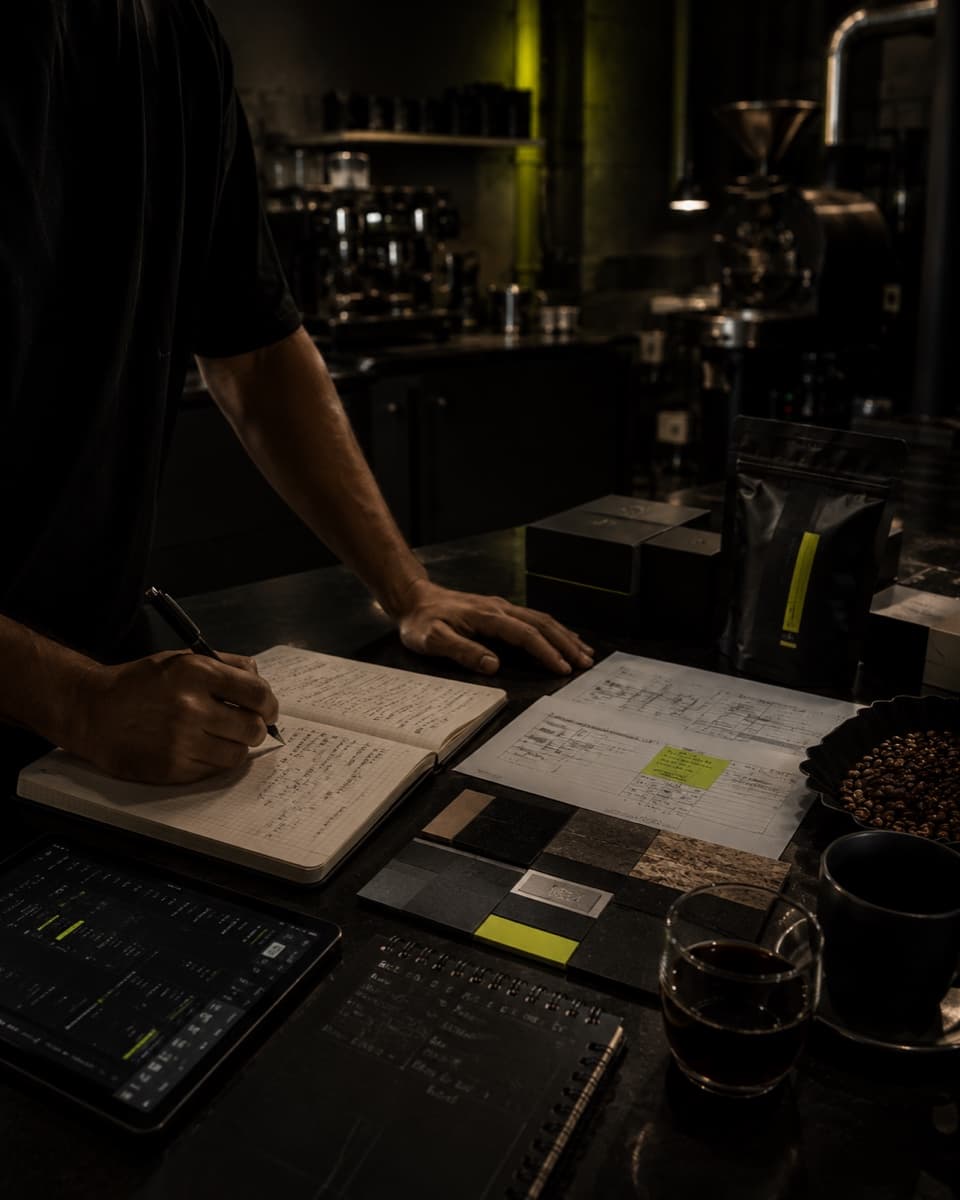
The working desk inside the ROBOOST operating environment: shift notebook, site drawing, material samples and beans.
FOUNDER STORY
The system grew out of daily operations.
BOOST BRANDS did not start with an idea about a technology platform. First there was a physical business: product, team, shifts, guests and daily accountability for the result.
The ROBOOST experience showed which processes can be standardised, which decisions must be measured, and where the company still depends on manual control.
- 01WORKING
A real business
Product, locations and daily contact with a person. Here every hypothesis meets reality immediately.
- 02WORKING
Operating discipline
Standards, training, production, supply and quality control turn a single operation into a repeatable system.
- 03PILOT → ROADMAP
A system on top of experience
System memory and smart operations are built on top of working locations — as each hypothesis is validated.
“I did not start with a platform. I started with a location where every day you can see what works and what does not. Now the task is to move that discipline into a system that does not depend on me.”
Next challenge
Make the company less dependent on the founder’s manual control and prove the system repeats — on a dense physical cluster and in the next category.
Choose the conversation
Money and partnership are two different conversations.
ROUTE AInvestorsFunding a location, a cluster, a loan or strategic participation. Terms are calculated per project and discussed in person — they are not on the site.Open →ROUTE BOperating partnersPremises, supply, production and city clusters. A conversation about working together, not about funding.Open →